Hi! We're Fallthrough Media, a podcast production company. We make podcasts like Fallthrough and it's aftershow, Break.

Latest Episodes

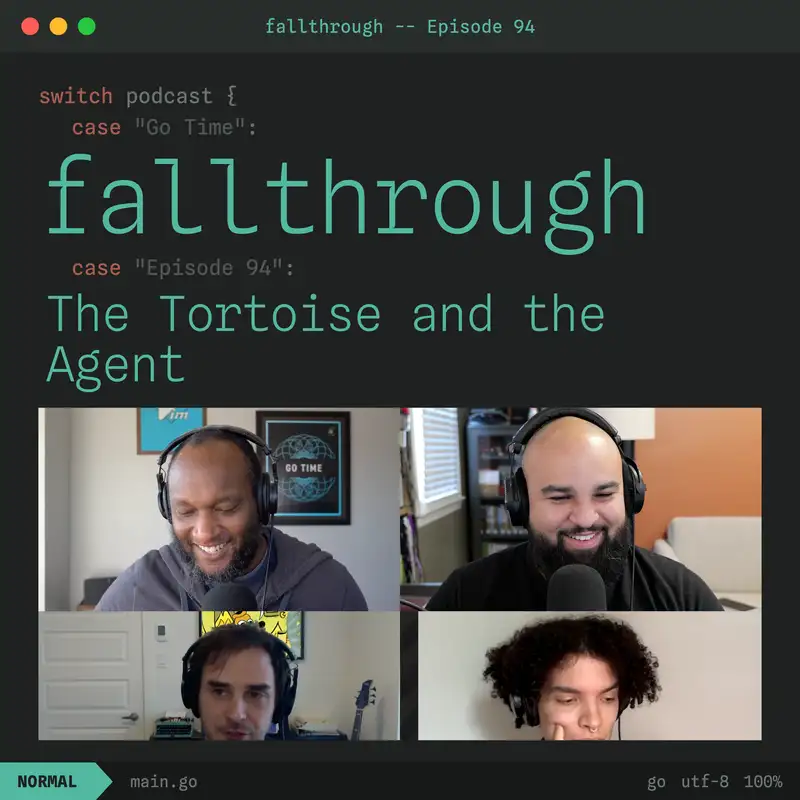
The Tortoise and the Agent

On this week's episode, Kris and Matt are joined by Fred Hebert and Reid Savage from Honeycomb to talk discuss building products with tiny teams, why code reviews are a useful bottleneck that we should keep around, and how AI mandates make a mistake in risk management. Fred discusses how his team uses vibe-coding to create false work that gets a new product standing on its own. Then the panel discusses having forgiving environments, why production isn't great place to learn, ensuring that worst case scenarios aren't avoided, and why the best use of AI is for personal tooling, not the stuff your team uses. Do you hear that? Yes! That is the sound of supporter content! This week that includes Fred's admission that AI has made his life as an engineer worse, Reid's argument for why managers are definitely sticking around, why we're still going to be buying technology instead of just vibe coding it, and Fred and Reid's must-read book list. Not a supporter yet? Become one today by going to https://fallthrough.fm/subscribe, you'll get extra content in Fallthrough, bonus discussions in Continue, and higher quality audio-only editions! If you prefer to watch this episode, you can view it on YouTube: https://youtu.be/m52ef550Fpg. No episode of the aftershow this week. We'll have more aftershow episodes soon! In the meantime, catch up on previous episodes at https://break.show. Thanks for tuning in and happy listening! Table of Contents: Prologue (00:00:00) Chapter 1: Team Tenant: Don't Be a Poison Pill for SaaS (00:00:47) Chapter 2: False Work: We Pretend That Releases Work (00:02:31) Chapter 3: Meant to Be Thrown Away (00:05:54) Chapter 7: Vocal Critics Because They're Heavy Users (00:07:36) Chapter 8: Substrates of Different Speeds (00:09:46) Chapter 9: Dogfood, Kibble, and a Forgiving Environment (00:13:02) Chapter 10: I Can't Build on This (00:15:07) Chapter 11: Prod Is the Worst Time to Learn (00:18:21) Chapter 12: Blocking Because It's Important (00:21:44) Chapter 13: Five Teams of One (00:23:55) Chapter 14: You Can't Eliminate Incidents (00:27:22) Chapter 18: If It's Not Broke, Don't Fix It (00:28:52) Chapter 19: Who Do We Kill in Space to Save on Earth? (00:30:29) Chapter 20: Carrots and Sticks (00:35:23) Chapter 21: We've Been Bad at Risk Management (00:37:41) Chapter 22: The Problem Isn't Code Review, It's CI (00:40:46) Chapter 24: Get Some of the AI Budget (00:42:45) Chapter 25: The Garbage Cloud (00:45:59) Chapter 26: Put It Behind Auth [Extended] (00:48:59) Chapter 27: Personal Software, Organizational Software (00:51:54) Chapter 28: Workarounds Are a Signal (00:53:58) Chapter 29: Restructure the Puzzle (00:57:54) Chapter 30: Blowing Through the Process (00:59:30) Chapter 31: Learning Out Loud (01:02:49) Chapter 32: An Oversized Sink (01:04:04) Chapter 34: No Novel Problems (01:07:04) Chapter 35: Reading Old Books Is Good (01:08:15) Epilogue (01:10:12) Socials: Website Bluesky Threads X/Twitter LinkedIn Instagram TikTok Changelog Zulip Gophers Slack

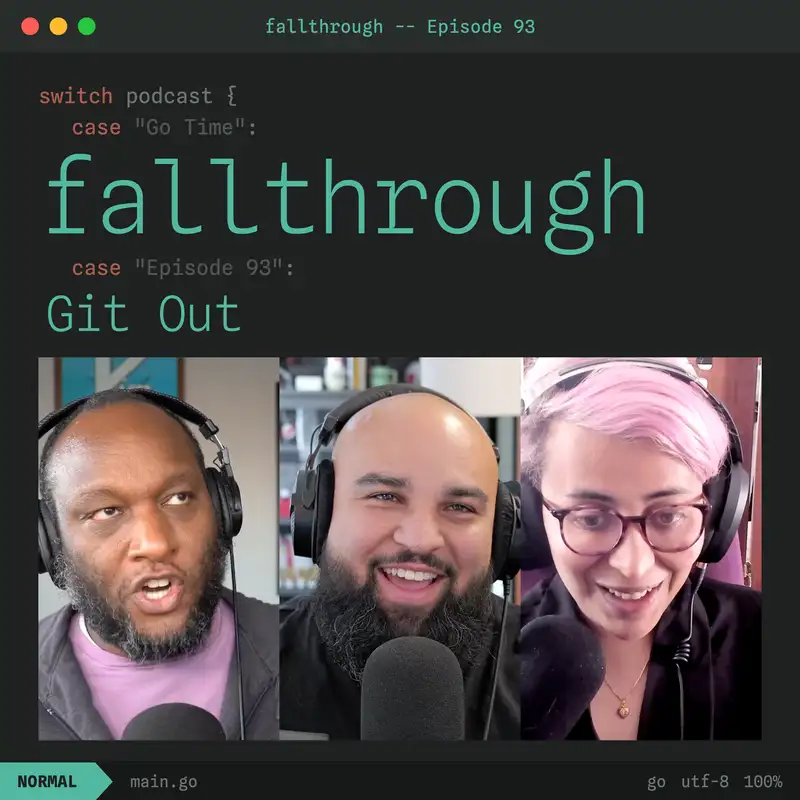
Git Out

Change is challenging but quite often the tools that we used to solve yesterday's problems are unfit for tomorrow's problems. In this episode, Kris and Matt are joined by Rain Paharia, one of Matt's colleagues at Oxide who is also the creator of cargo-nextest. The trio discuss version control, the most difficult problem of Rain's career, and the challenge of rigor in an age when it's becoming cheaper than ever. Rain brings their knowledge from a decade at Meta to our ongoing discussion of jj, git, and why version control systems are so much better at the big tech companies. The trio discusses their gripes with GitHub, including some fresh perspectives from Rain on GitHub's attempts to fix issues (including some awkwardness with how Stacked PRs actually work). Then the conversation shifts to discussing how the team at Oxide managed to create an incremental updating system that works on air-gapped racks with hundreds of components. Along the way the trio also discuss API versioning and property based testing. You might be wondering where Kris' voice is in this episode? Well, he can certainly be heard in this weeks' supporter content! This week the expanded edition includes deep conversations about why LLMs got better at code but worse at prose, why Rain doesn't allow LLMs to write comments, LLMs as cliche machines, and some discussion of our favorite topic, Go modules. Are you not a supporter yet? You should fix that! Head on over to https://fallthrough.fm/subscribe and sign up today. You'll get expanded content in Fallthrough, bonus discussions in Continue, and higher quality audio-only editions. If you prefer to watch this episode, you can view it on YouTube: https://youtu.be/C-xkusj-uvc. Thanks for tuning in and happy listening! Table of Contents: Prologue (00:00:00) Chapter 1: Meet Rain Paharia (00:01:39) Chapter 2: Three Months Without Telling Anyone (00:03:21) Chapter 3: JJ for Git Refugees (00:05:49) Chapter 4: Simpler and More Powerful (00:09:17) Chapter 5: Agents Actually Like JJ More (00:12:28) Chapter 6: Worth Spending Tokens on Beautiful Things (00:14:32) Chapter 7: Git Is a Little Bit Outsider Art (00:17:11) Chapter 8: Eleven Stacked Diffs (00:21:28) Chapter 9: Force Pushes Don't Work (00:25:26) Chapter 10: Super Pull Requests (00:27:50) Chapter 11: Does No One Have Product Vision at GitHub? (00:30:04) Chapter 12: Meta Had Docker Before Docker (00:32:38) Chapter 13: Meta's Final Form (00:35:19) Chapter 14: Minimum Upgradable Product (00:38:26) Chapter 15: The Hardest Problem of My Career (00:41:26) Chapter 16: Consider Fewer Microservices (00:44:28) Chapter 17: The Hardest Version of the Hardest Problem (00:46:58) Chapter 18: Everything Gets Translated to API Calls (00:50:39) Chapter 18: Everything Gets Translated to API Calls (00:51:28) Chapter 19: Update the Server Before the Client (00:55:19) Chapter 20: The Source of Truth Is Rust (00:58:43) Chapter 21: Burden Proportional to the Change (01:02:34) Chapter 22: A Little-Known Rust Feature (01:06:29) Chapter 23: No Secret Sauce (01:08:55) Chapter 24: Testing Is Hard (01:10:28) Chapter 25: Property-Based Testing 101 (01:12:42) Chapter 26: A Simpler, Less Efficient Version (01:17:02) Chapter 27: Two Lenses on the Same Thing (01:18:49) Chapter 28: Allow Me to Provide a Stepping Stone (01:24:03) Chapter 29: Six Bugs, Then None (01:28:18) Chapter 30: A Rock-Solid Window Manager (01:32:43) Epilogue (01:37:01) Socials: Website Bluesky Threads X/Twitter LinkedIn Instagram TikTok Changelog Zulip Gophers Slack

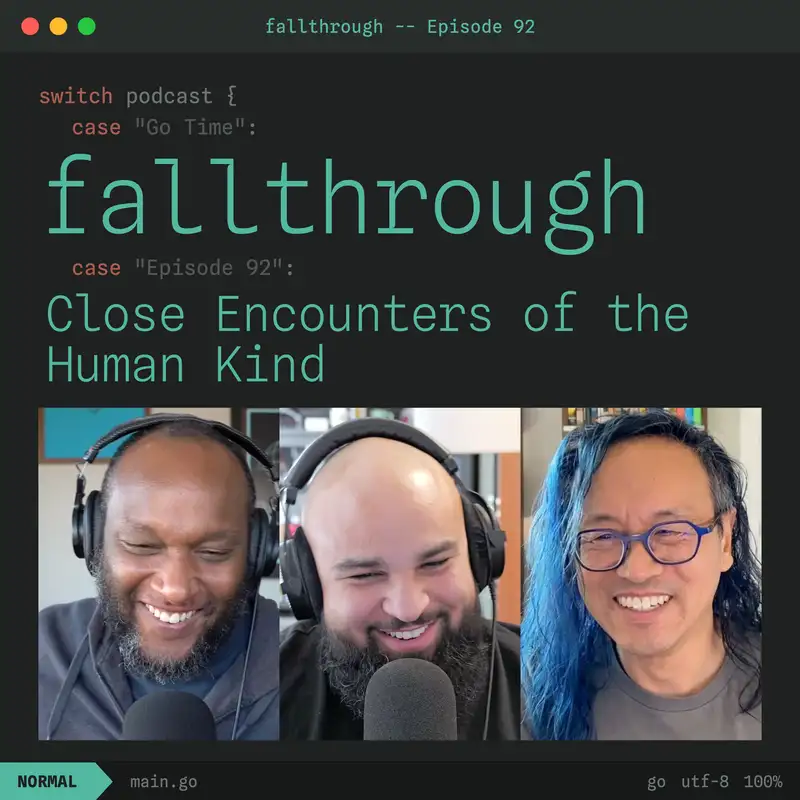
Close Encounters of the Human Kind

How should we spend our time now that writing code is cheap? In this episode, Kris and Matt are joined by Doug Soo, a staff engineer working on the storage systems at Honeycomb. They discuss his blog post Spend More Time Talking to Humans, how AI is changing software development, and how that affects the way we communicate. The trio go from hedging the claim that we trust the output of compilers so we should trust the output of agents, how correcting LLMs can lead to exhaustion with little benefit, the ways in which decision making has become the core job of software engineers, how change can be actively bad, and the difference between optimism and hope. For our wonderful supporters we have an expanded edition! In this week's expanded content we have advice on how to reconcile AI with your career, regardless of whether you're just getting started or if you've been doing this for 30 years; an MIT class that shaped the way Doug thinks; how to tell if you actually enjoy implementation and which implementation skills matter; and Kris' prediction that the era of agents is coming to an end. Not a supporter yet? You can fix that right now by going to https://fallthrough.fm/subscribe and signing up today. You'll get expanded editions of Fallthrough, bonus content in our other podcasts, and higher quality audio-only editions. Sign up today! If you prefer to watch this episode, you can view it on YouTube: https://youtu.be/kMo8aazKPCc. No episode of the aftershow this week. We'll have more aftershow episodes soon! In the meantime, catch up on previous episodes at https://break.show. Thanks for tuning in and happy listening! Table of Contents: Prologue (00:00:00) Chapter 1: Spend More Time Talking to Humans (00:01:26) Chapter 2: Who I Am and How I Got Here (00:03:34) Chapter 3: Your Users Are Twofold (00:05:04) Chapter 4: One to Two Weeks, One to Two Minutes (00:09:06) Chapter 5: Trust Was Earned (00:12:52) Chapter 6: Just Another Tool (00:15:34) Chapter 7: Faster, But Not Better (00:18:54) Chapter 8: A Big Fan of Pairing (00:21:18) Chapter 9: What Do You Do With All the Junior Engineers? (00:25:06) Chapter 10: Should We Slow Down With LLMs? (00:28:10) Chapter 11: Draining in a Different Way (00:31:33) Chapter 12: Now Everyone Is a Product Engineer (00:34:48) Chapter 13: Change Itself Is Actively Bad (00:37:35) Chapter 14: Stability and Primitives (00:40:57) Chapter 15: The Ultra Software Factory (00:43:12) Chapter 16: Where's the Net New Software? (00:47:23) Chapter 17: The Types of Recruiter Emails I Get (00:51:14) Chapter 18: You Must Use This Many Tokens (00:53:40) Chapter 19: Not Necessarily For and Against (00:58:07) Chapter 20: The Mediocre Answer Is Never Spicy (01:02:17) Epilogue (01:04:54) Socials: Website Bluesky Threads X/Twitter LinkedIn Instagram TikTok Changelog Zulip Gophers Slack

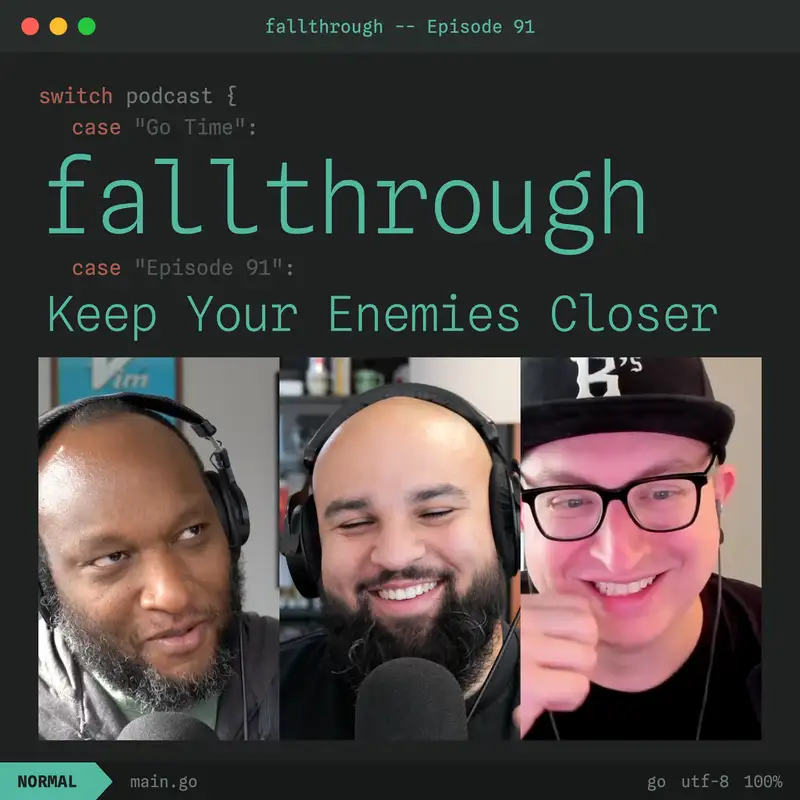
Keep Your Enemies Closer

Steve is back! He joins Kris and Matt to discuss the drama around DHH's latest keynote at Rails World and Steve's latest views on AI. Interestingly, Steve believes that he'll sit in opposition to how Kris and Matt see the current situation. We start with Steve giving us the long backstory of Rails and DHH. The trio then dives into a conversation about purity tests, whether you can learn from people you dislike, and why making Linux a viable third option for desktop environments is important. From there they dive into whether the agents that carried out hacks were actually told to do that, whether alignment is about intent or obedience, and whether it's better to be worried about Skynet now or later. Hilariously, during this conversation, Steve's AI personal assistant texts him during the recording, bringing up a deeper conversation about AI personal assistants and how much information we should actually give them. Supporter only content? But of course! This week the panel digs into whether AI agents are basically hammers, why agents make native apps economically viable, Kris' argument that the literacy crisis poses a much larger and more existential risk than AI, the ways in which the pronunciation trend on TikTok is weird classism, and what happens when Jev played the trolley problem. Not a supporter yet? You can fix that today by heading over to https://fallthrough.fm/subscribe where you can sign up to gain access to extra content in our podcasts and higher quality audio-only editions. If you prefer to watch this episode, you can view it on YouTube: https://youtu.be/0Rdd1RZx-t4. Thanks for tuning in and happy listening! Table of Contents: Prologue (00:00:00) Chapter 1: A Thing Called RailsConf (00:02:38) Chapter 2: This Is David at DavidConf (00:07:51) Chapter 3: A Purity Spiral (00:11:48) Chapter 6: This Guy Sucks, Therefore He Must Be Wrong (00:14:26) Chapter 7: A Quintessential Purity Test (00:20:09) Chapter 8: A Third Option for the Desktop (00:23:00) Chapter 9: Things Without Time Attached (00:28:15) Chapter 11: I Did This to Get Away From You (00:33:14) Chapter 12: We Told the Thing to Hack and It Hacked (00:35:44) Chapter 13: Remove Your Tie (00:40:46) Chapter 14: Unaligned Humans With Powerful Tools (00:45:45) Chapter 15: Worried About Skynet Now Rather Than Later (00:50:32) Chapter 16: Intelligence Is the Collective (00:53:54) Chapter 19: That's a Lot of Killing You Gotta Do (00:59:40) Chapter 20: Why Rich People Have Personal Assistants (01:02:17) Chapter 21: Science Fiction 18 Months Ago (01:05:31) Chapter 22: Not Where It Will Wind Up (01:10:15) Chapter 24: These Are Just Predictions (01:12:27) Epilogue (01:14:07) Socials: Website Bluesky Threads X/Twitter LinkedIn Instagram TikTok Changelog Zulip Gophers Slack

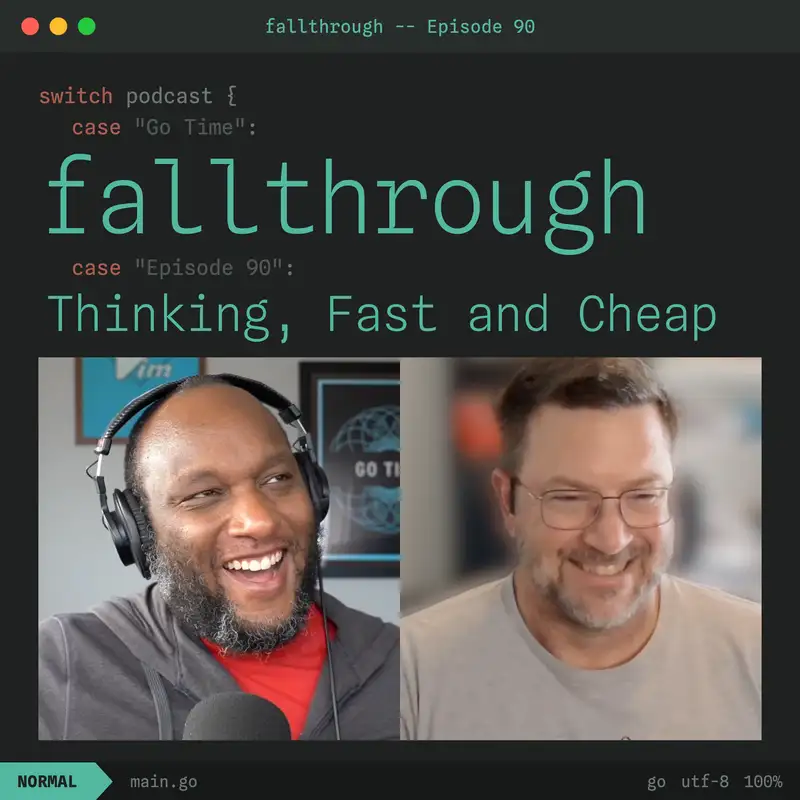
Thinking, Fast and Cheap

Another week, another duo episode, but this time around it's Dylan who's joining Kris! He brings a fresh perspective to the AI conversationĀ  that Kris and Matt have been engaging in. The big question: is AI going to kill us all? Dylan thinks the odds are "astronomically small" and neither Kris nor him are going to lose sleep over the fear driven hype. The two are asking bigger questions: whether what language models are doing is thinking, why those who build these models in AI labs aren't actually the people who understand them the best, and whether TypeSafe AI's new Jev model is an LLM and what one can do with it. They touch on token maxxing, the increasing flood of AI slop, whether we can truly look at the code we ship, and as always why Kris is unbothered by nearly all of this. We've got supporter content, of course! In this week's content we include a discussion of what one can actually build with TypeSafe AI's Jev, why good and evil aren't useful categories, a candid conversation about policing from two somewhat opposing vantage points, why filling potholes isn't an ideology, and more. Not a supporter yet? Fix that today by heading over to https://fallthrough.fm/subscribe where you'll get not only extra content but also higher quality audio. Sign up today! If you prefer to watch this episode, you can view it on YouTube: https://youtu.be/xCtImPOmEzg. No episode of the aftershow this week. We'll have more aftershow episodes soon! In the meantime, catch up on previous episodes at https://break.show. Thanks for tuning in and happy listening! Table of Contents: Prologue (00:00:00) Chapter 1: Hyperbolic Claims Make for Good Headlines (00:01:49) Chapter 2: A Thousand Things Would Need to Happen (00:04:19) Chapter 3: A Glass of Water Sweats Too (00:07:07) Chapter 4: Too Much Science Fiction (00:10:57) Chapter 5: Pilots, Not Aerospace Engineers (00:12:43) Chapter 6: Computers Are Dumb (00:16:32) Chapter 7: Token Maxing Has Gotten Absurd (00:22:25) Chapter 8: Average General Intelligence (00:28:05) Chapter 9: It's Just Jitter (00:29:33) Chapter 10: Jev: Still a Large Language Model (00:32:12) Chapter 12: Slop and Pangram (00:36:36) Chapter 13: My Doomer Take: Shipping Without Looking (00:41:37) Chapter 14: Words on Paper (00:48:34) Chapter 15: Sitting in a Stew (00:52:09) Chapter 16: People in Fear Are Not Rational (00:54:38) Chapter 17: The Deep Weirdos of Tech (00:57:10) Chapter 24: We Don't Have an Educated Populace (00:59:40) Chapter 25: Perpetually Unbothered (01:04:19) Epilogue (01:06:36) Socials: Website Bluesky Threads X/Twitter LinkedIn Instagram TikTok Changelog Zulip Gophers Slack

Hosts

Dylan Bourque

Dylan Bourque

Host of Fallthrough
Ian Wester-Lopshire

Ian Wester-Lopshire

Host of Fallthrough
Jamie Tanna

Jamie Tanna

Host of Fallthrough
Johnny Boursiquot

Johnny Boursiquot

Host of Fallthrough